

Category: Healthcare
Hospitals Can Teach Us Better Ways of Billing Patients

In the era of the high-deductible health plan, boosting payments can seem like a tall order for clinics as they’re billing patients. One way clinics and practices can help patients deal with the realities of their higher healthcare costs is to adapt and learn from the changes some hospitals have made to their billing systems.
Investigate insurance company takeback claims

Accuracy and due diligence in accounts receivable management is key to any management of a practice or clinic. Still, unexpected setbacks will mar even the most flawless system, disrupting projections and cash flow. One of these is a tactic used to boost profits known as insurance company takebacks or recoupments. What happens is after the
Patient Bill Confusion: Creating a Drag on Your Revenue

It’s not just the insurance companies that are slow to pay—it’s also the patients. Nearly a quarter of healthcare providers say that slow-paying patients are a “significant challenge.” At least one underlying cause comes to mind: higher deductible plans. According to one survey, 39.4 percent of American patients don’t pay right away because they want
A case for better price transparency at the doctor’s office

One possible path to boosting revenues and reducing accounts receivables borrows a page from an unlikely place: the price transparency found in plastic surgeon marketing. Because of the elective nature of plastic surgery, this resembles a competitive market. That is, these are medical professionals who deal with patients who have to pay out of pocket.
IC System Attends AAHAM’s Legislative Day

Healthcare is a major issue throughout the country right now, and the 2017 Legislative Day held May 1-2 on Capitol Hill provided a forum to discuss some of the prevalent issues. IC System experts in the healthcare industry, Paul Fitzpatrick and Mary Prendergast, attended the event held at the Hyatt Regency Washington and hosted by
Use accounts receivable days as a measuring stick

There’s no greater asset to a business than accounts receivable days. Consider the dense weave of financial sources, from insurance payers to the federal government to individual patients. This is an asset that needs careful management or its value starts escaping, like the leak of a punctured balloon. For that reason, providers are drilling down
Don’t shy away from asking for payment at the appointment

In the past, we’ve discussed the many benefits of getting your front desk staff into the habit of requesting upfront payments from patients. Taking this head-on rather than relying on a passive billing system can boost your revenues, and give patients the opportunity to address problems early. How do you put this into practice? One
Insurance paying too little? Don’t accept it. Negotiate!

Getting the insurance company to come to the table and actually negotiate provider reimbursement rates can feel like attempting to scale a 30-foot cement wall without equipment. This is especially true when the payer just tosses over a slate of rates that undercuts the value of your work. But it turns out if you accept the
Insurance debate: Patient anxiety over high medical costs
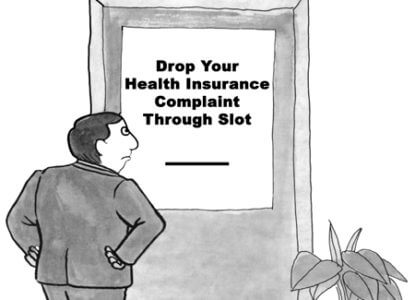
Politics aside, one fact that stands out through the ongoing debate on how we regulate health insurance is this: Patients are deeply concerned about the costs of their medical care. A recently released study highlights these anxieties and how U.S. patients are dealing with them. Seventy-four percent say their health care costs have risen over the past
Is it time to rethink the annual checkup?

The idea of the annual exam is well-woven in the fabric of our medical care. Whether the patient is covered by traditional insurance or a government plan, they’re entitled to at least one examination a year, complete with a battery of lab tests and screenings. However, it may be time to modernize this practice of the yearly